Blog
Engineering notes, architecture deep-dives, and neutral analysis on the execution-state continuity layer and the systems converging on it.
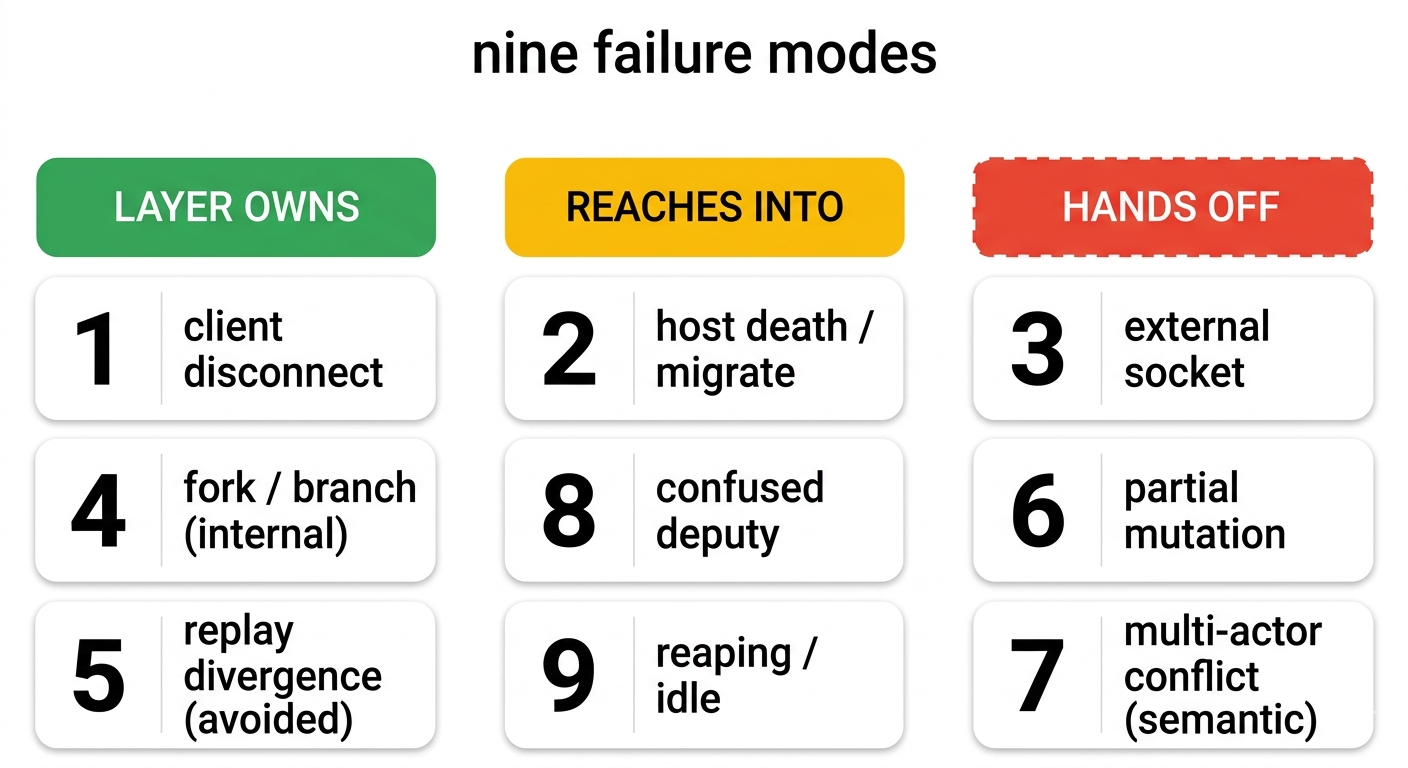 Failure Modes of a Continuity LayerA whitepaper enumeration of all nine failure modes of an execution-state continuity layer, what each guarantees versus hands off, and the one thing it explicitly refuses to promise.
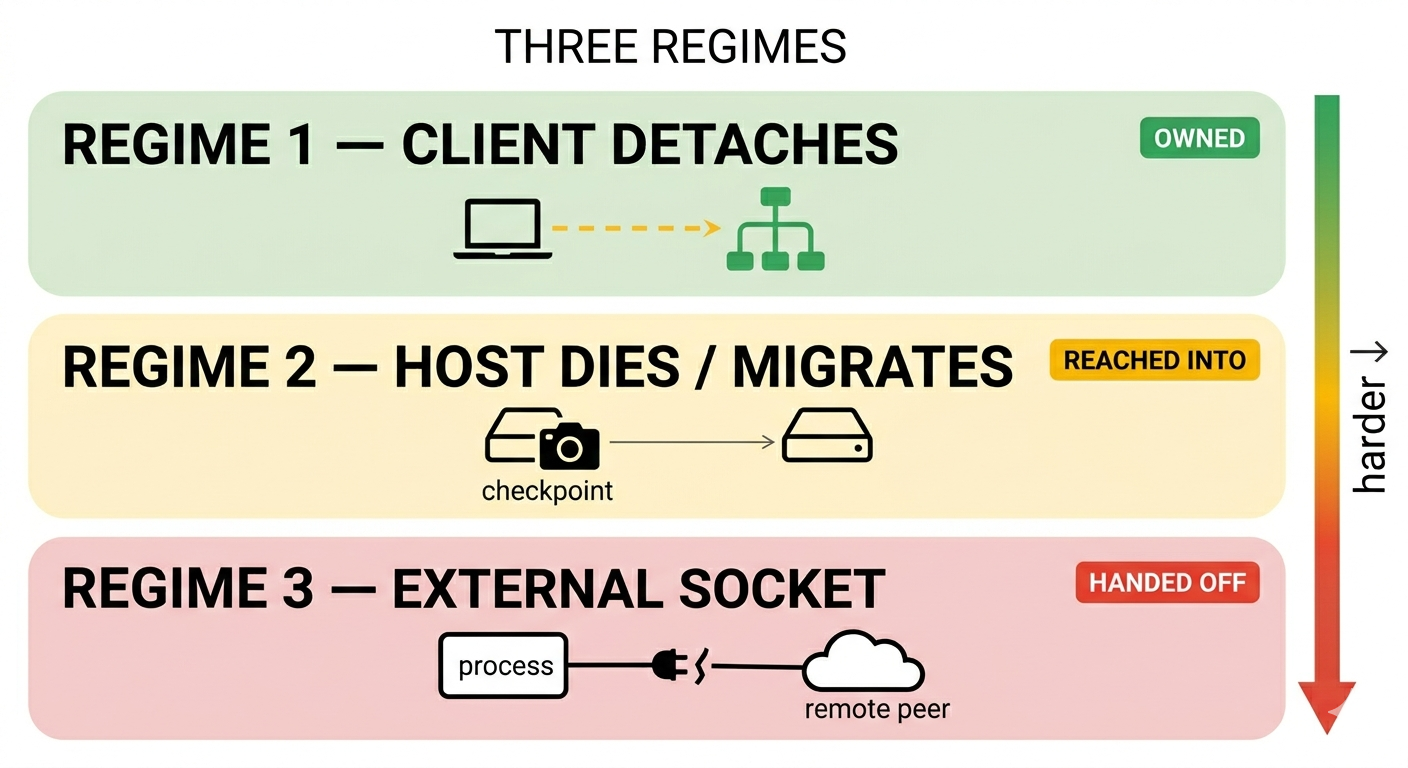 The Boundary: What Execution-State Continuity Is NotThree continuity regimes: the layer owns client-detach, reaches into host-death, hands off the external socket — and the falsifiable claim that no prior art composes ownerless execution.
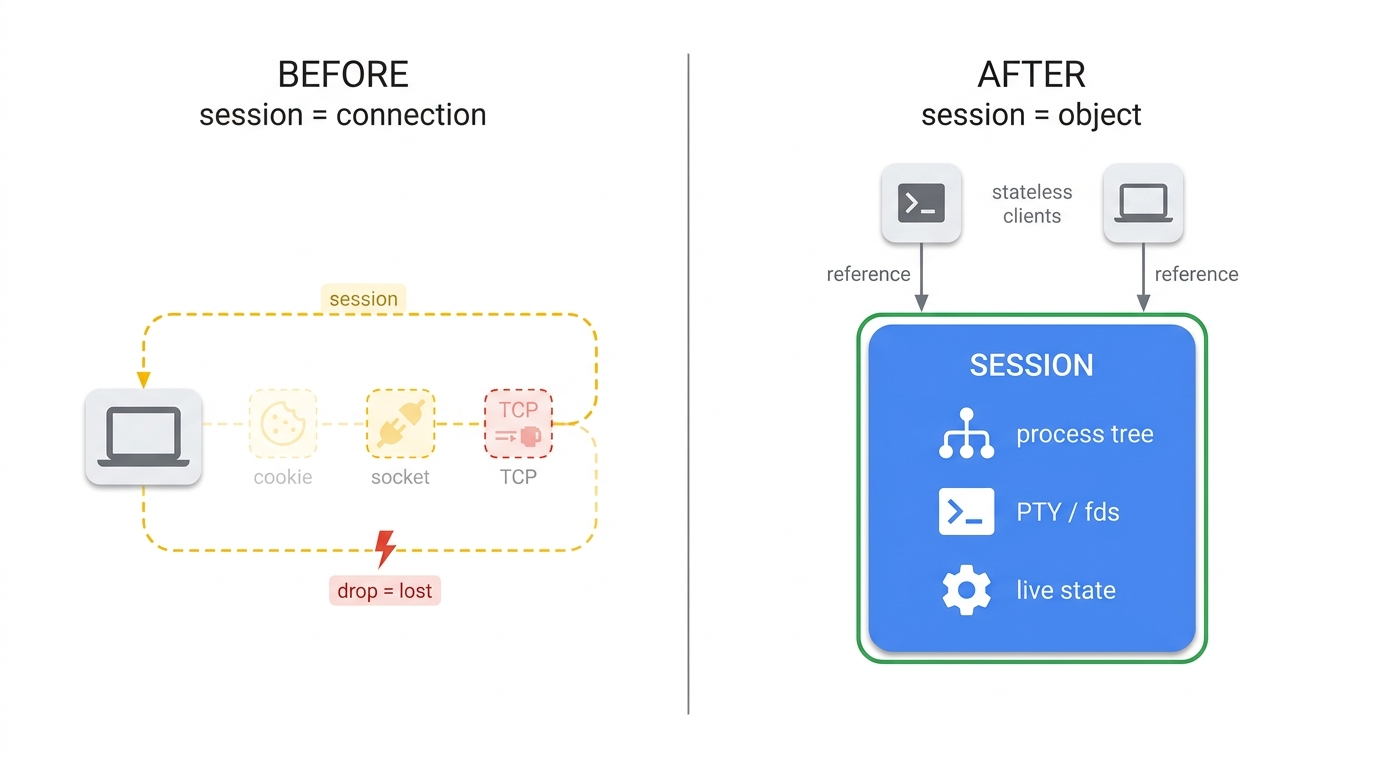 The Session as a Computational PrimitiveTreat the session as a first-class persistent, addressable, single-homed ownerless object that holds live execution state — not a connection, cookie, or socket clients own.
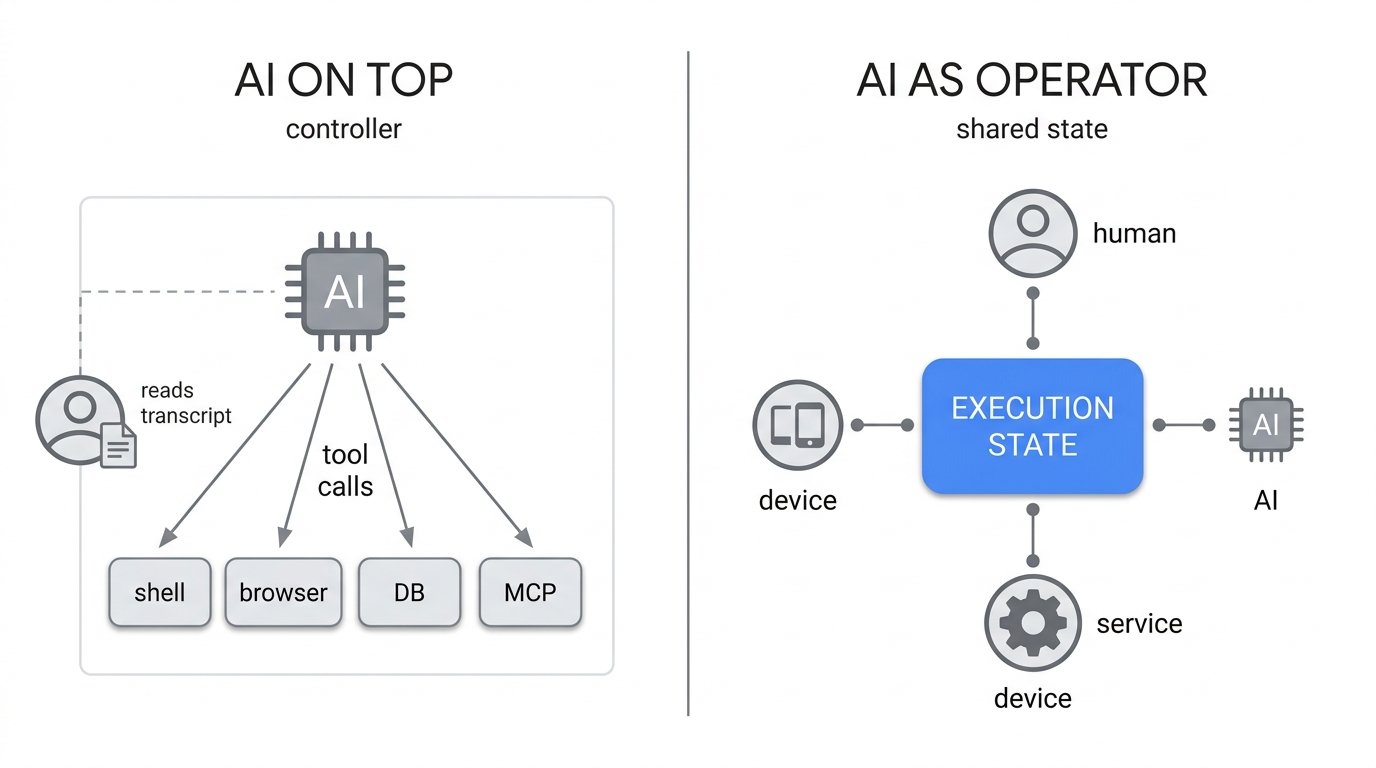 AI as Operator, Not Controller: The Multi-Actor Execution ModelThe operator model puts AI inside one shared live execution alongside humans and devices, attaching as operators with asymmetric-but-transferable authority — not a controller dispatching tools from above.
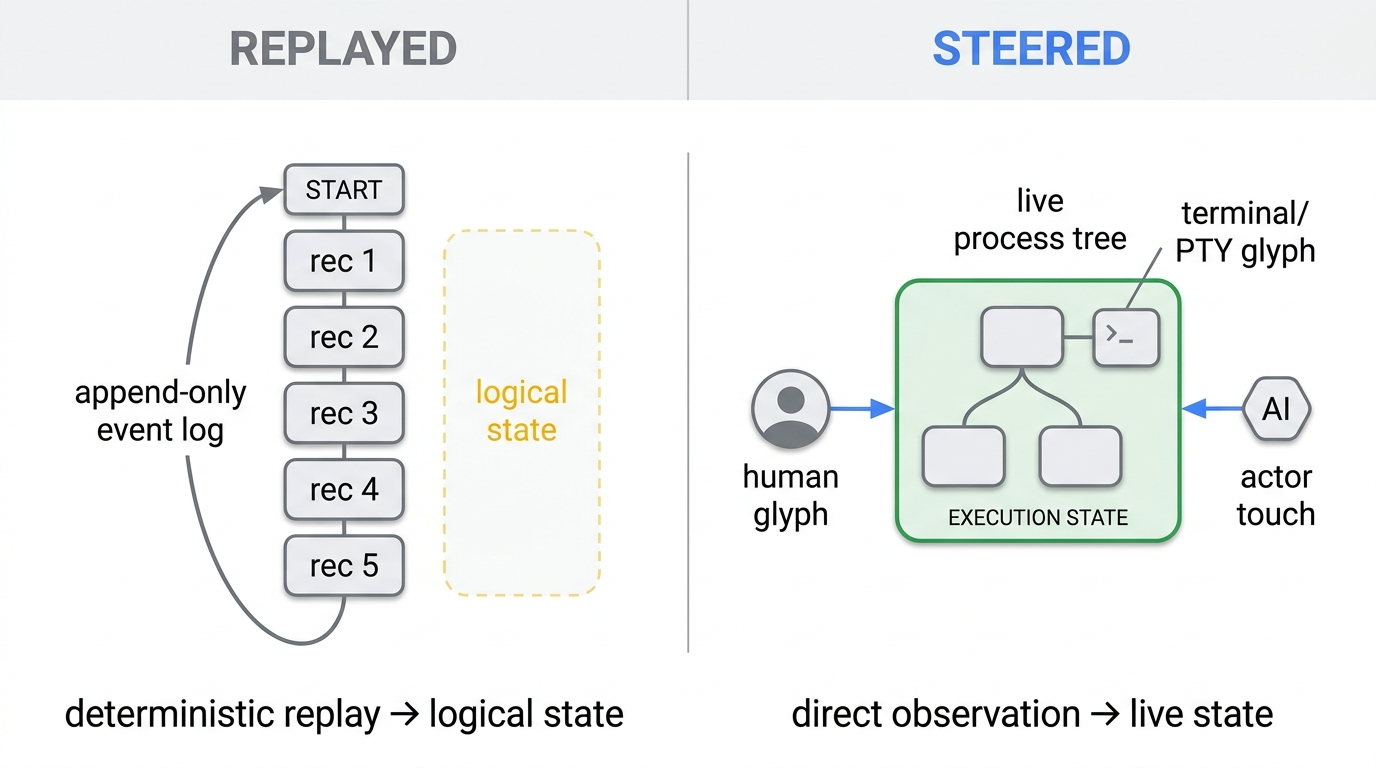 Steered, Not Replayed: Execution Graphs vs Workflow GraphsSteered, not replayed: an execution graph is a live OS-level object steered by direct observation, not a workflow graph replayed from a log — the ownerless execution-state continuity layer.
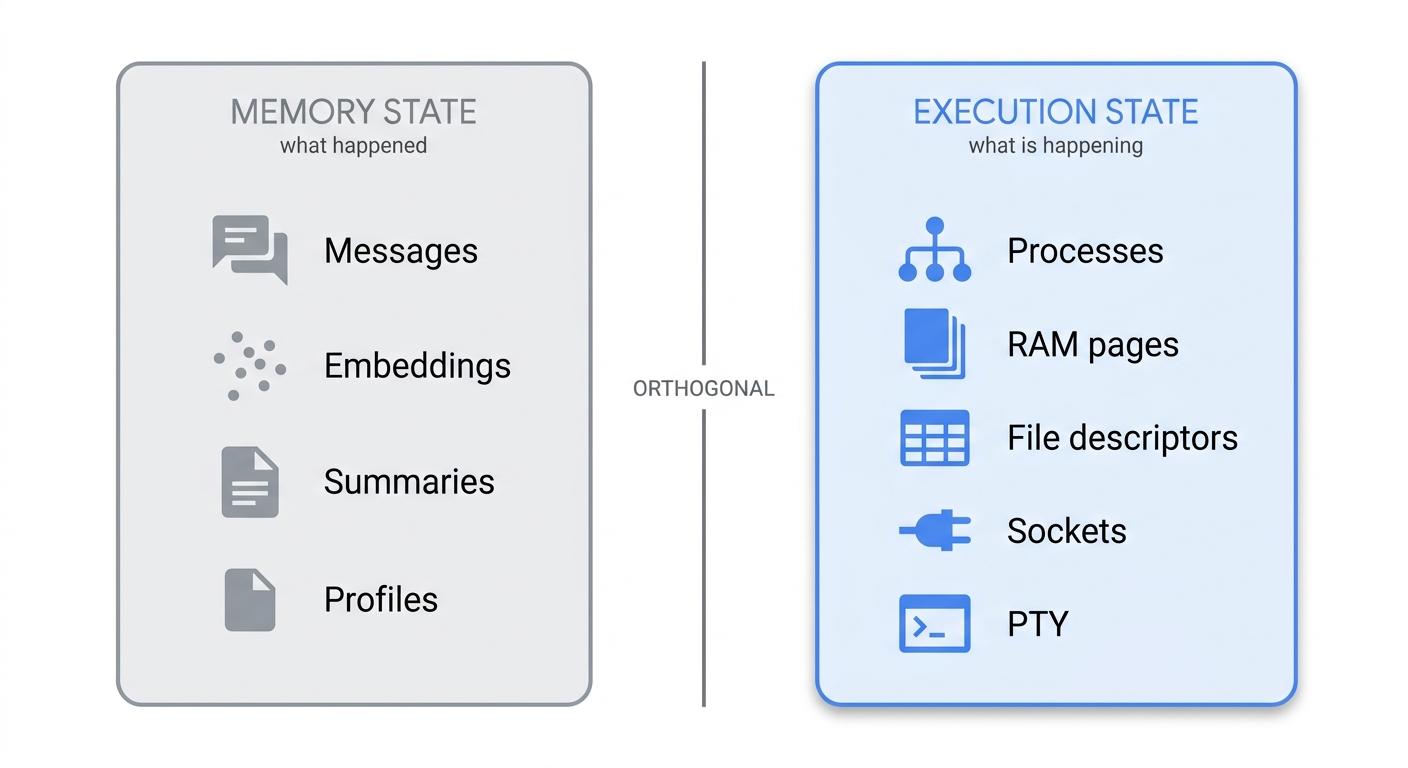 Persistent Memory Is Not Persistent Execution StatePersistent memory is not persistent execution state: the ownerless execution-state continuity layer keeps the live runtime alive, while memory only records what happened.
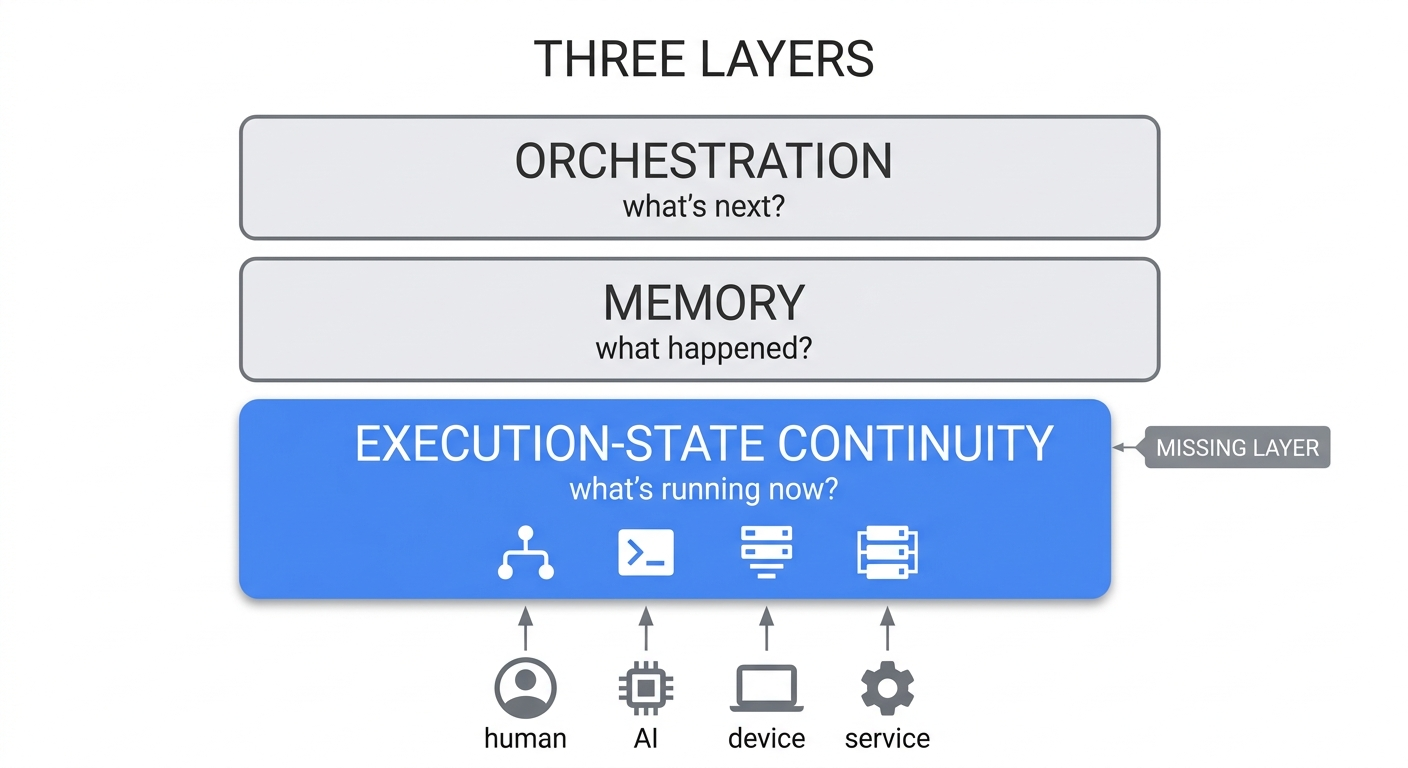 The Missing Layer: Why AI-Native Systems Need Execution-State ContinuityThe execution-state continuity layer is the missing third layer of AI-native systems: a single-homed, ownerless live runtime that operators attach to.
- CMDOP Skills vs OpenClaw: Two Approaches to AI Agent SkillsA technical comparison of CMDOP and OpenClaw skill systems — SDK-powered packages with marketplace vs markdown-only prompt templates.
 Cmdop
Cmdop